
Wind Energy Forged Components: Critical Parts, Materials & Quality Requirements
Wind turbines operate under demanding mechanical and environmental conditions. Discover how forged components, suitable materials, dimensional accuracy and inspection requirements contribute to reliable wind energy equipment.

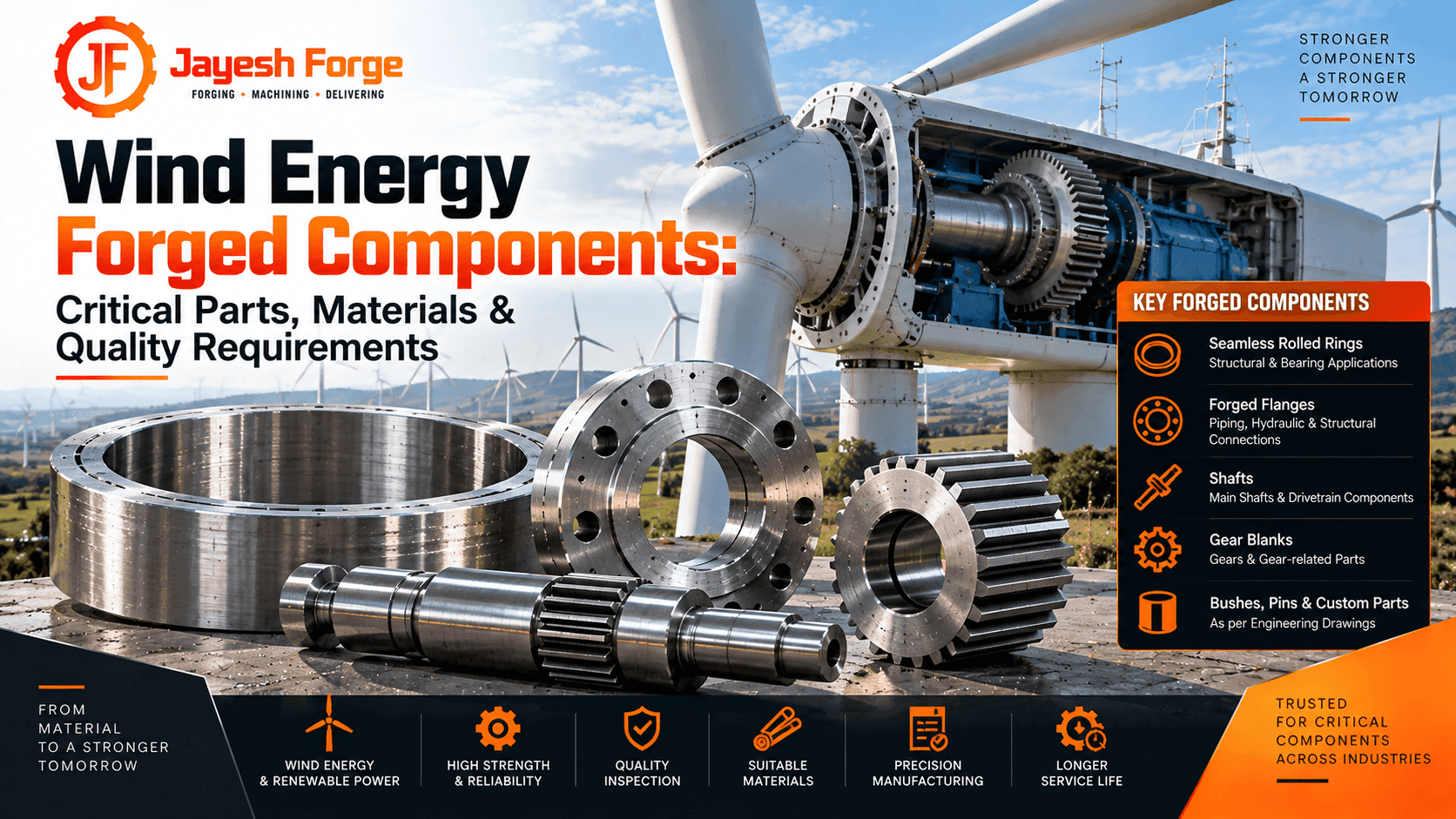
Quick AnswerFeatured
Wind turbines operate under demanding mechanical and environmental conditions. Discover how forged components, suitable materials, dimensional accuracy and inspection requirements contribute to reliable wind energy equipment.
Wind energy equipment is designed to operate for years under changing loads, vibration, weather exposure and demanding maintenance conditions. From the main drivetrain to structural connections, every component must be manufactured according to its design requirements and intended service conditions.
Forged components play an important role in many wind energy applications because the forging process can produce useful component geometries and directional material flow. However, selecting a forged part involves more than choosing a shape. Material grade, manufacturing route, heat treatment, machining allowance, dimensional tolerances and inspection requirements must all be considered.
For OEMs, engineering teams and procurement professionals, understanding these factors helps improve supplier evaluation and component sourcing decisions.
Key Takeaways
- Component function determines the specification: Rings, flanges, shafts and gear-related components have different design and manufacturing requirements.
- Material selection must match service conditions: Strength, toughness, fatigue requirements, corrosion exposure and operating temperature can influence material choice.
- Forging is only one part of quality: Heat treatment, machining, inspection and traceability also affect component suitability.
- Inspection should be planned early: Dimensional checks, material verification and specified non-destructive testing should be agreed upon before production.
- A detailed RFQ reduces uncertainty: Drawings, material specifications, quantities, acceptance criteria and documentation requirements help suppliers quote accurately.
1. Why Forged Components Matter in Wind Energy
Wind turbines experience fluctuating loads as wind speed and direction change. The drivetrain and supporting structures may also experience vibration, torque and repeated loading during operation.
Depending on the turbine design, forged components may be used in areas such as:
- Main shafts and selected drivetrain components.
- Gear blanks and other gear-related parts.
- Structural rings and connecting components.
- Flanges and bolting-related interfaces.
- Bushes, pins and selected mechanical parts.
- Custom components manufactured to engineering drawings.
Not every wind turbine uses the same component design or manufacturing route. Some parts may be cast, fabricated, machined from bar or plate, or produced through other processes. The appropriate route depends on the component's geometry, loading, material, size, production volume and applicable engineering requirements.
The objective is not simply to choose forging for every application. It is to select a manufacturing process that meets the component's functional and quality requirements.
2. Common Forged Components Used in Wind Energy Equipment
A. Seamless rolled rings
Seamless rolled rings are used in a range of heavy industrial applications where annular geometry is required. Depending on the design, potential wind energy applications may include structural rings, bearing-related parts and other large circular components.
Ring rolling can produce a ring-shaped component with material flow developed through deformation. The final performance still depends on the material, forging reduction, heat treatment, ring dimensions, machining and inspection.
When specifying a rolled ring, buyers should define:
- Required outside and inside diameters.
- Height, wall thickness and machining allowance.
- Material grade and delivery condition.
- Required mechanical properties.
- Dimensional tolerances and inspection criteria.
B. Flanges and connecting components
Flanges provide bolted connections in many industrial systems. Depending on the wind energy equipment and design, forged flanges may be required for selected piping, hydraulic, lubrication or other mechanical interfaces.
The flange specification should identify the applicable standard or drawing, material, pressure or loading requirements where relevant, facing, dimensions and bolting arrangement.
A flange should not be selected by nominal size alone. Its design requirements and operating environment determine whether the proposed component is suitable.
C. Shafts and drivetrain components
Shafts transmit torque and support rotating assemblies. Depending on their position within the drivetrain, they may be subject to torsion, bending, cyclic loading and dimensional requirements at bearing or coupling interfaces.
For shaft forgings, important considerations include:
- Material grade and specified mechanical properties.
- Shaft geometry, shoulders and transitions.
- Grain-flow orientation where relevant to the design.
- Heat-treatment condition.
- Machining allowance and final tolerances.
- Required inspection and material traceability.
A suitable manufacturing and inspection plan should be agreed upon with the component designer and supplier.
D. Gear blanks and related components
Gear blanks form the starting geometry for subsequent gear machining or other specified operations. They may be used in drivetrain or auxiliary equipment depending on the design.
The material and manufacturing route should be selected according to the finished component's requirements. For gears requiring surface hardening, the specification must also account for the intended heat treatment, case properties where applicable, core properties and finishing operations.
A forged blank does not automatically guarantee the final gear's performance. Gear geometry, machining quality, heat treatment and verification remain important.
3. Choosing the Right Material for Wind Energy Forgings
Material selection should begin with the engineering specification rather than a general assumption that one steel grade is suitable for every wind turbine component.
Common material groups used in industrial forging include carbon steels, alloy steels and stainless steels. Their suitability depends on the part's design, loading, environment and specified properties.
| Material group | Potential considerations | What buyers should confirm |
|---|---|---|
| Carbon steel | Strength, cost, machinability and service conditions | Exact grade, mechanical properties and delivery condition |
| Alloy steel | Hardenability and achievable mechanical properties for demanding applications | Grade, heat treatment, section size and required test results |
| Stainless steel | Corrosion resistance for suitable environments | Stainless grade, corrosion conditions and material certification |
| Other specified alloys | Special mechanical or environmental requirements | Approved specification, availability and manufacturing capability |
The table is a general selection guide, not a material approval list. Final selection must follow the component drawing, applicable material standard and design requirements.
For larger cross-sections, engineers should also consider whether the specified heat-treatment route can achieve the required properties throughout the relevant section. Material certificates and test results should be reviewed against the purchase specification.
4. How Forging, Heat Treatment and Machining Work Together
The quality of a finished wind energy component depends on the complete manufacturing route.
Forging
The forging process shapes heated metal through controlled deformation. The selected process, starting stock, reduction, temperature control and component geometry influence the resulting material condition.
Where grain flow is important to the component design, the forging route should be appropriate for the required geometry and loading direction.
Heat treatment
Heat treatment may be used to achieve specified hardness, strength, toughness or machinability. The correct process depends on the material grade, section size and required delivery condition.
Buyers should identify the required condition in the purchase specification rather than requesting heat treatment without defining the intended outcome.
Machining
Machining brings the component to its specified dimensions and surface finish. For components with bearing seats, bolt holes, sealing faces or tight geometric tolerances, the machining plan is an important part of quality control.
Final inspection
Final verification should establish that the component conforms to the agreed drawing and specification. Depending on the application, this may include dimensional inspection, material verification, mechanical testing, hardness testing and specified non-destructive examination.
These stages should be planned together. Changes to material, geometry or heat treatment can affect downstream machining and inspection.
5. Quality Inspection Requirements for Wind Energy Components
Wind energy components may have long service lives and can be difficult or expensive to replace once installed. Procurement teams should therefore define inspection requirements before manufacturing begins.
The required checks depend on the component's criticality, design specification and applicable standards.
- Material verification: Confirm the material designation and review the material test certificate against the purchase order.
- Mechanical testing: Specify required tensile properties, impact testing or other tests where required by the component specification.
- Hardness testing: Define the applicable test method, locations and acceptance range when hardness is a specified characteristic.
- Dimensional inspection: Verify critical diameters, thicknesses, lengths, hole positions, runout and other drawing requirements as applicable.
- Non-destructive testing (NDT): Ultrasonic testing, magnetic particle testing or other methods may be specified depending on material, geometry and defect-detection requirements. The method, coverage, acceptance criteria and reporting requirements should be agreed in advance.
- Traceability: Establish how the component will be linked to its material certificate, manufacturing records and inspection reports.
Not every component requires every test. Inspection should follow the approved drawing, purchase specification and applicable quality requirements.
6. What Should Procurement Teams Include in an RFQ?
A complete request for quotation helps the supplier understand the technical scope, manufacturing route and commercial requirements.
Include the following information wherever applicable:
- Component drawing with revision number.
- Component name and intended application.
- Material grade and applicable material standard.
- Raw forging dimensions or finished dimensions.
- Required quantity per order and estimated annual demand.
- Required delivery condition and heat treatment.
- Machining scope and dimensional tolerances.
- Required inspection and NDT methods.
- Material certificate and inspection documentation.
- Packaging, marking and traceability requirements.
- Delivery location and expected schedule.
If the drawing is preliminary, identify the open engineering points rather than assuming that the supplier will determine the final design requirements.
For critical components, inspection and acceptance requirements should be resolved before the purchase order is released.
7. Common Sourcing Mistakes to Avoid
- Selecting by price alone: A lower initial quote may not represent the lowest total cost if machining allowance, inspection, documentation, delivery or rework requirements are different.
- Sending incomplete drawings: Missing dimensions, material details or acceptance criteria can lead to assumptions and quotation revisions. Confirm the drawing revision and technical scope before placing the order.
- Treating all forgings as equivalent: Components produced from different materials or through different forging and heat-treatment routes may not be interchangeable. Changes should follow the appropriate engineering approval process.
- Defining inspection after production: Late inspection requirements can cause delays, extra costs or disagreement over acceptance. Specify testing and documentation requirements during quotation.
- Ignoring traceability: For components requiring documented quality assurance, material and inspection records should be included in the agreed delivery package.
8. Working With a Forging Manufacturer
When evaluating a forging supplier for wind energy components, procurement and engineering teams should assess more than equipment availability.
Consider whether the manufacturer can demonstrate:
- Experience with the required component type and material.
- A suitable forging route for the specified geometry.
- Control of material identification and production records.
- Access to the required heat treatment and machining operations.
- Inspection capability or qualified inspection partners.
- Ability to meet dimensional and documentation requirements.
- Clear communication about capacity, lead time and technical limitations.
Where heat treatment, machining or testing is subcontracted, clarify responsibility, process control, traceability and final acceptance before awarding the order.
9. Wind Energy Forging Support From Jayesh Forge
Jayesh Forge serves industrial forging requirements involving components such as forged flanges, seamless rolled rings, gear blanks, bushes and custom parts manufactured to customer specifications.
For wind energy-related enquiries, the starting point is the component drawing, material grade, required dimensions, quantity and applicable quality requirements. These details help establish whether the component is suitable for the available manufacturing route and what additional processing or inspection may be needed.
The technical and commercial scope should be confirmed for each enquiry. Component suitability, manufacturing feasibility, delivery condition and inspection requirements must be reviewed against the customer's specification before an order is accepted.
If you are sourcing forged rings, flanges, gear blanks or other industrial forgings, share your drawing and technical requirements for an initial review.
Further Reading
- Grain Flow in Forging: Why It Matters for Component Strength and Performance
- Open Die vs Closed Die Forging: Which Process Is Right for Your Component?
- Seamless Rolled Rings vs Welded Rings: What Is the Difference?
- Flange Pressure Ratings Explained: ASME Class vs EN PN Ratings
- Heat Treatment of Forged Components: Why It Matters for Strength and Performance
- 42CrMo4 vs 20MnCr5: Which Steel Grade Is Right for Forged Components?
- How to Choose the Right Forged Flange for Oil & Gas Applications
Industry Standards & References
- ASME (American Society of Mechanical Engineers)
- ASTM International (Materials & Standards)
- Forging Process Overview
Conclusion
Wind energy forgings must be evaluated as part of a complete engineering and quality system. The right component specification brings together material selection, forging route, heat treatment, machining, inspection and traceability.
For OEMs and procurement teams, defining these requirements early helps reduce ambiguity, improve supplier comparisons and support more reliable purchasing decisions.
Planning a Wind Energy Forging Requirement?
Share your component drawing, material specification and quantity with Jayesh Forge to discuss manufacturing feasibility and quotation requirements.
Frequently Asked Questions
Forging can provide useful component geometries and controlled material deformation for applications where mechanical properties and manufacturing requirements justify the process. Suitability depends on the part design, material, manufacturing route and verification requirements.
Depending on the turbine design, forged components may include shafts, gear blanks, rings, flanges and selected mechanical connection parts. The exact component list varies by equipment type and manufacturer.
There is no single best steel for every application. Carbon steel, alloy steel or stainless steel may be suitable depending on loading, toughness, corrosion exposure, section size, heat treatment and the design specification.
No. Ultrasonic testing requirements depend on the component, material, geometry, applicable specification and criticality. Buyers should define the method, coverage and acceptance criteria in the purchase documents.
As specified by the purchase order, documentation may include a material test certificate, dimensional inspection report, mechanical test results, heat-treatment records, NDT reports and traceability information.
Provide the component drawing, material grade, dimensions, quantity, delivery condition, machining scope, inspection requirements and expected delivery schedule. Include the relevant standards and document requirements.
Author
Jayesh Forge Engineering Team shares practical engineering insights on industrial forging, material selection, manufacturing processes, inspection, and quality requirements for engineers, procurement teams, and industrial buyers across global markets.
Submit Technical RFQ
Connect with our metallurgy experts for custom die estimates, material substitution, or seamless rolled ring production.
Request a Forging Quote→