
Engineering & Metallurgy Blog
Deep-dive technical guides on metal forging metallurgy, ASTM/DIN standards, seamless ring rolling tolerances, and NDT ultrasonic testing.
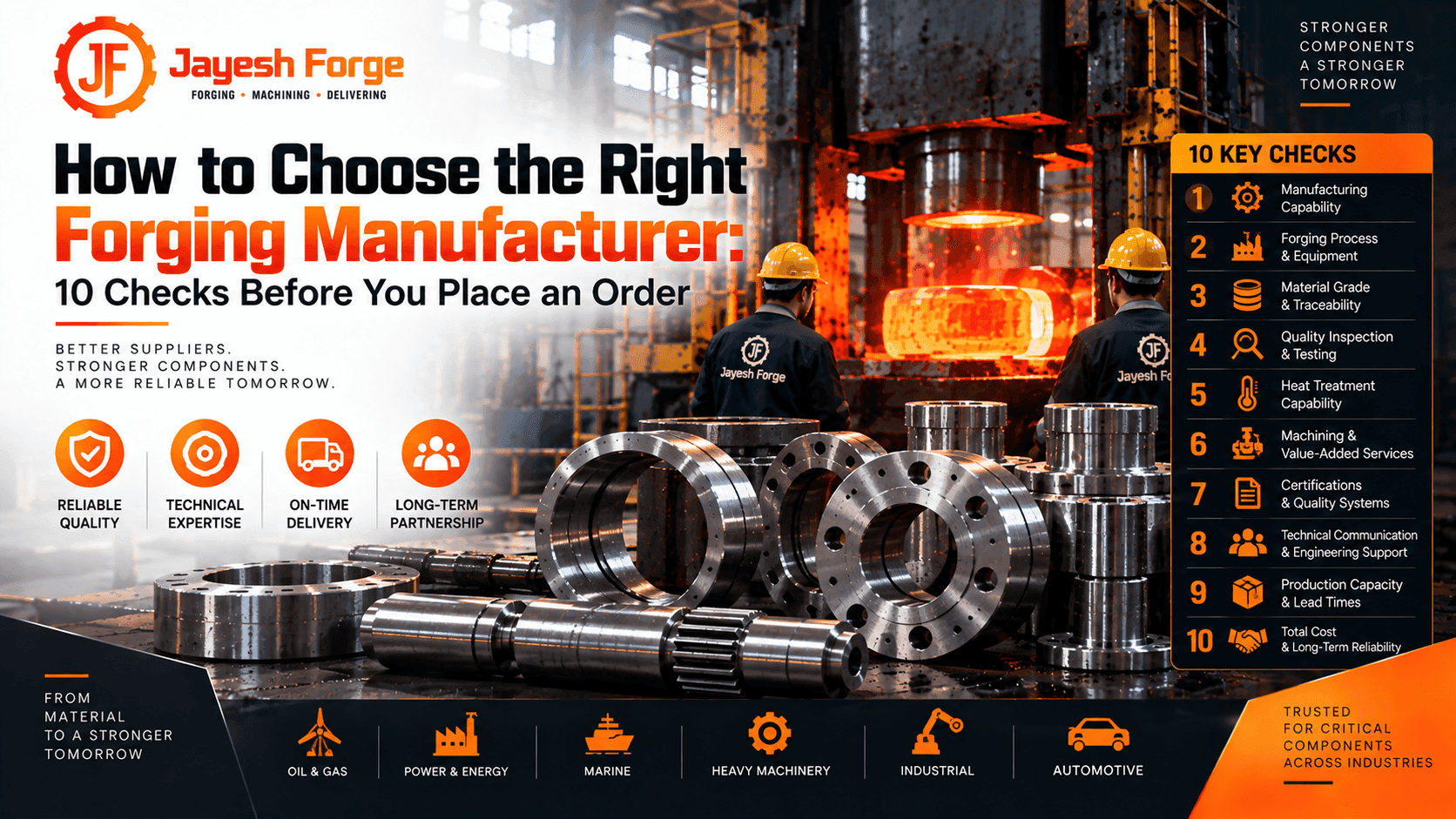
How to Choose the Right Forging Manufacturer: 10 Checks Before You Place an Order
Choosing a forging supplier involves more than comparing quotations. Use these 10 practical checks to evaluate manufacturing capability, quality systems, technical communication and long-term supply reliability.

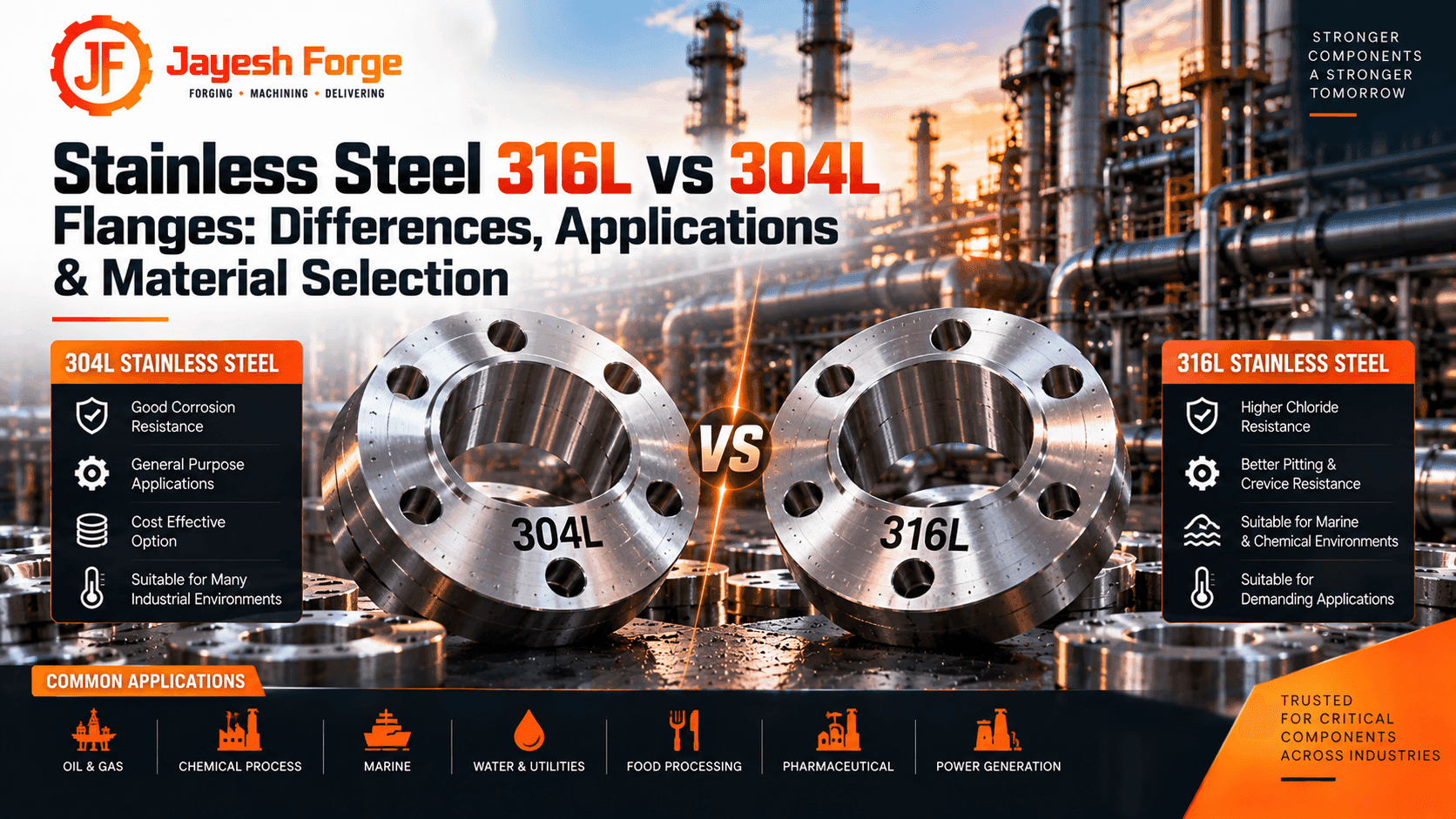
Stainless Steel 316L vs 304L Flanges: Differences, Applications & Material Selection
304L and 316L stainless steel flanges may look similar, but their alloy composition and corrosion resistance differ. Learn how to select the appropriate grade for your operating environment and application.
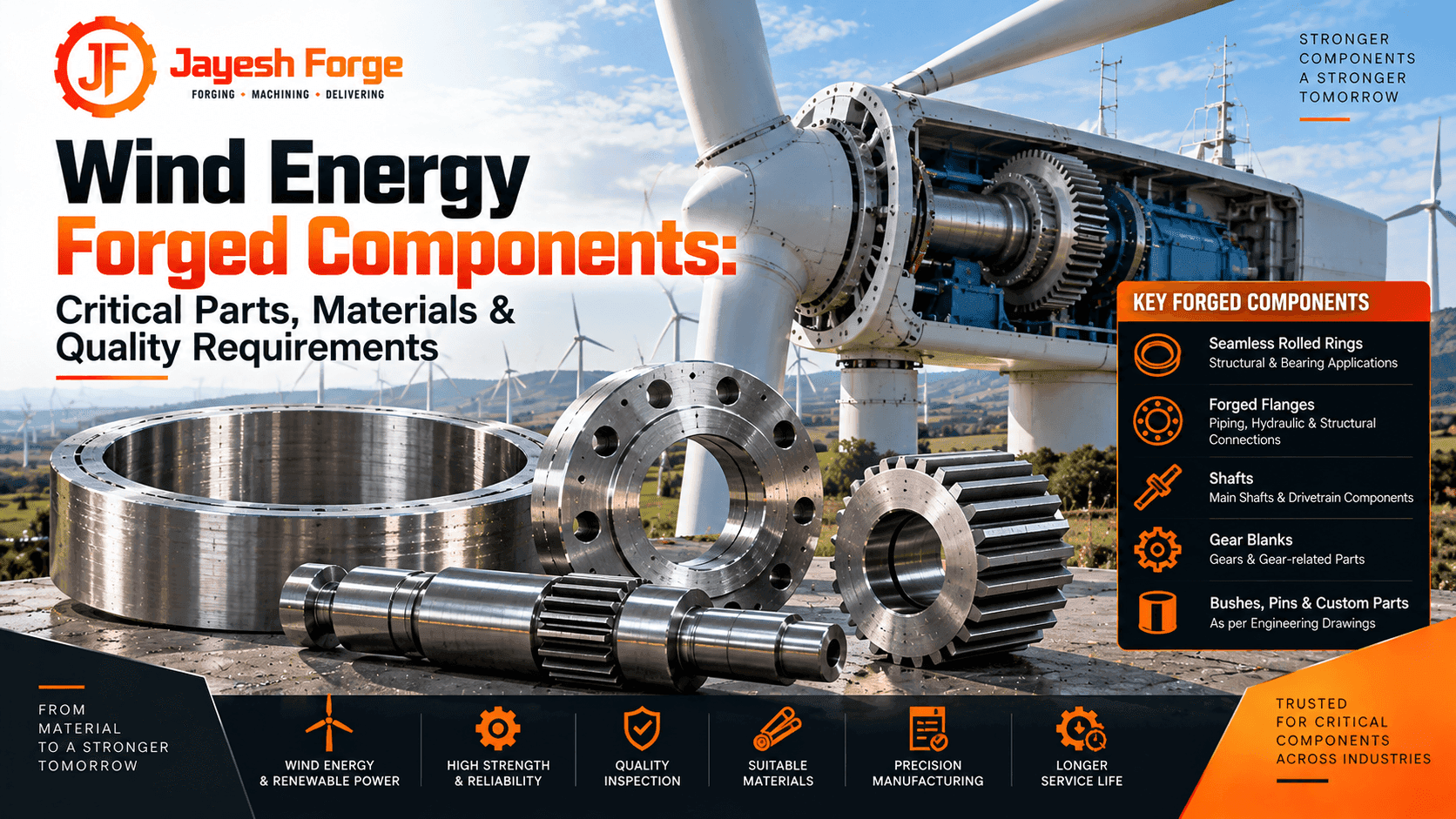
Wind Energy Forged Components: Critical Parts, Materials & Quality Requirements
Wind turbines operate under demanding mechanical and environmental conditions. Discover how forged components, suitable materials, dimensional accuracy and inspection requirements contribute to reliable wind energy equipment.
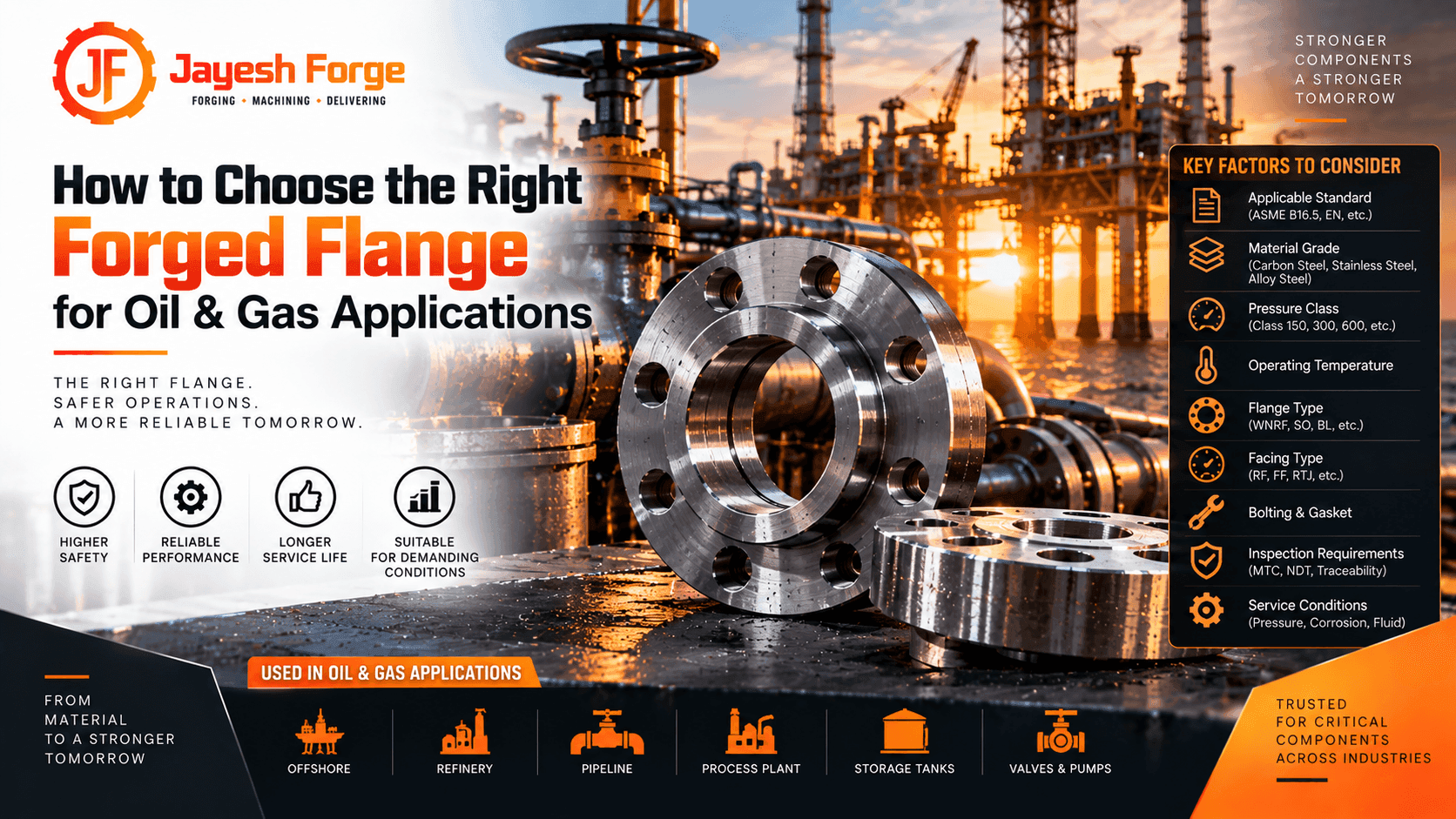
How to Choose the Right Forged Flange for Oil & Gas Applications
Choosing a forged flange for oil and gas applications requires more than selecting a size and pressure class. Learn which technical factors engineers and procurement teams should check before sourcing industrial forged flanges.
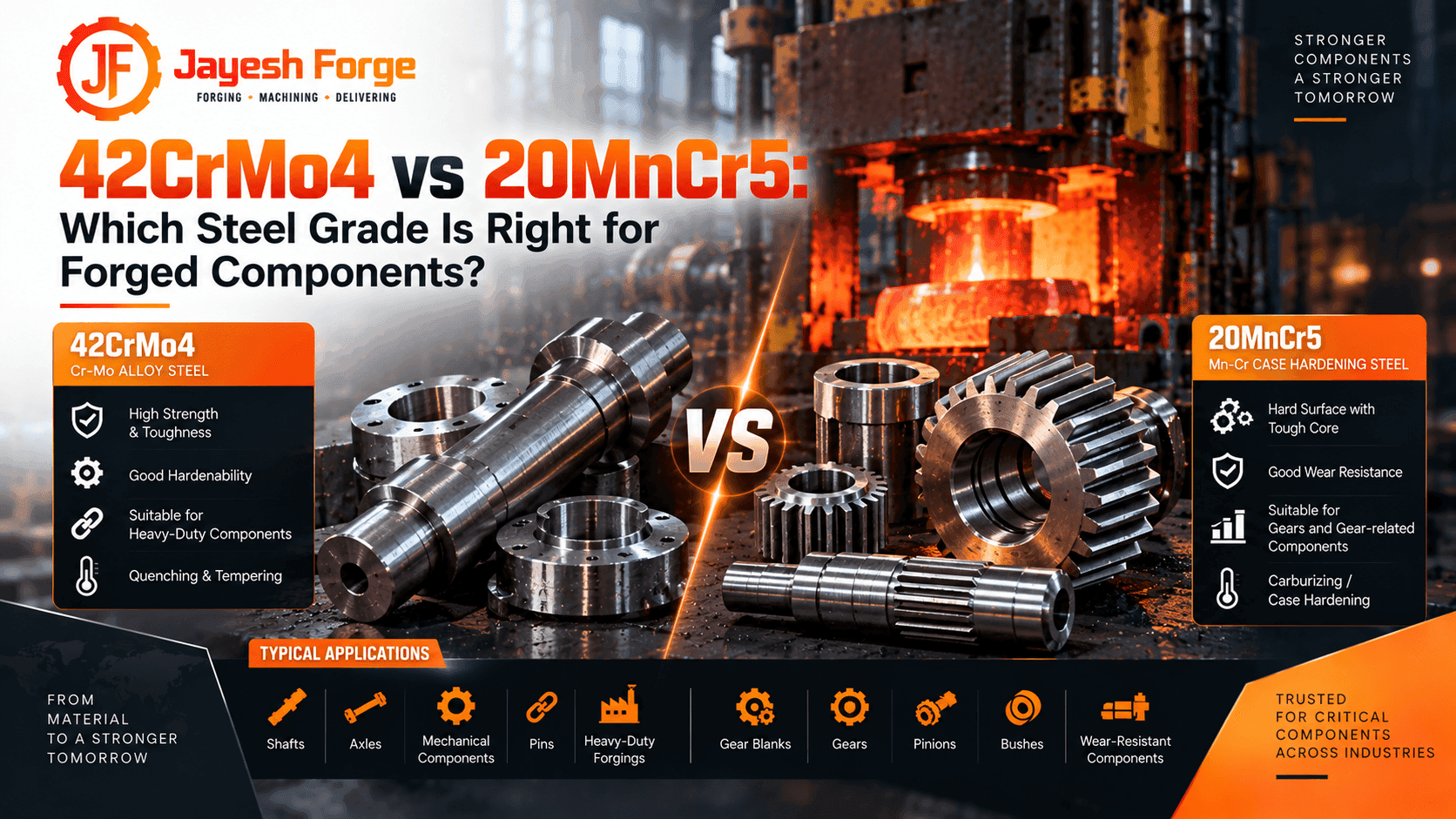
42CrMo4 vs 20MnCr5: Which Steel Grade Is Right for Forged Components?
42CrMo4 and 20MnCr5 are both widely relevant engineering steels, but they are selected for different component requirements. Understand the differences in material behaviour, heat treatment, surface hardness, core properties and typical applications before choosing a grade.
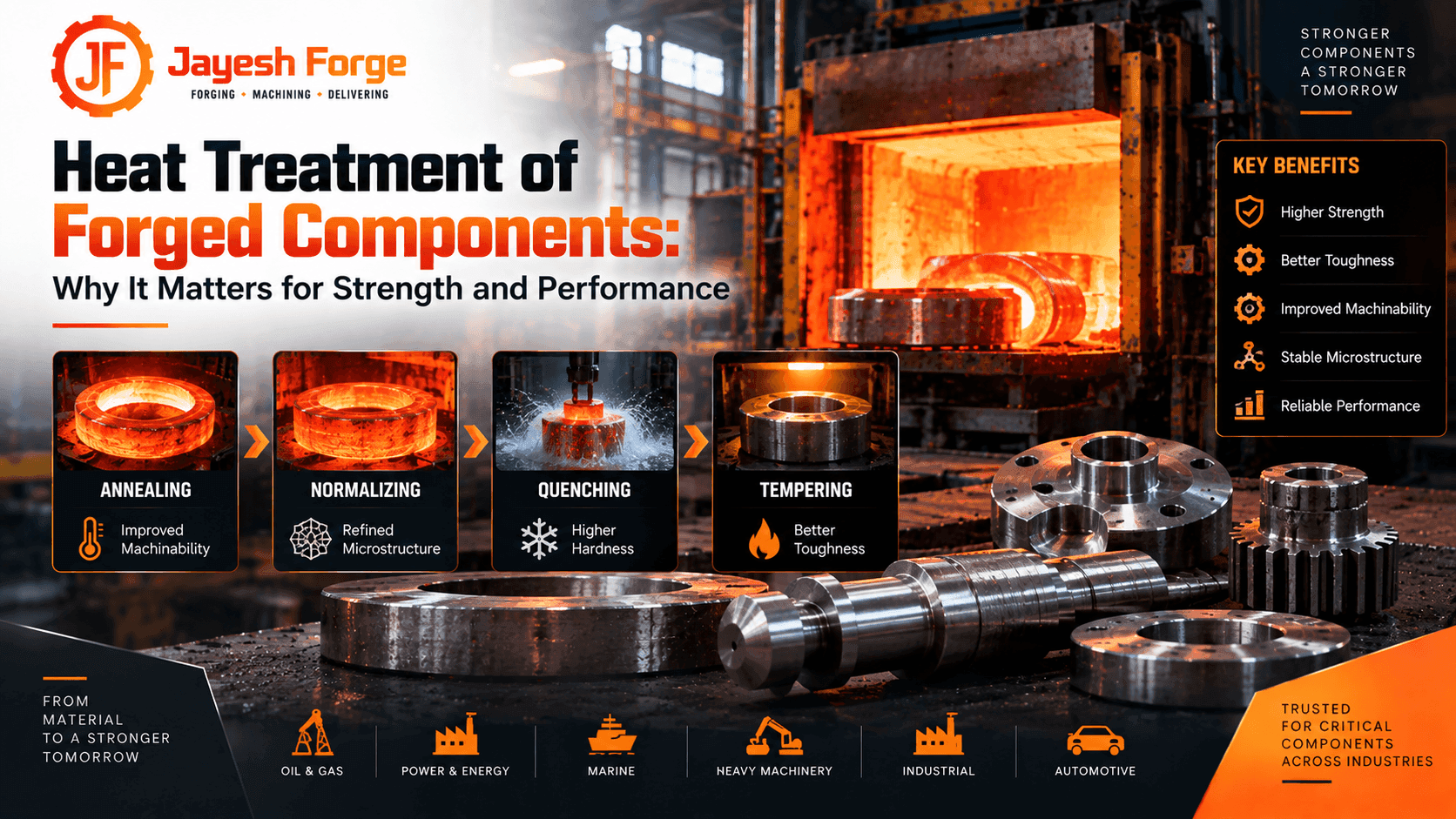
Heat Treatment of Forged Components: Why It Matters for Strength and Performance
Forging creates the component shape, but heat treatment helps achieve the required material condition and mechanical properties. Understand common heat-treatment processes and what engineers should specify when sourcing forged components.
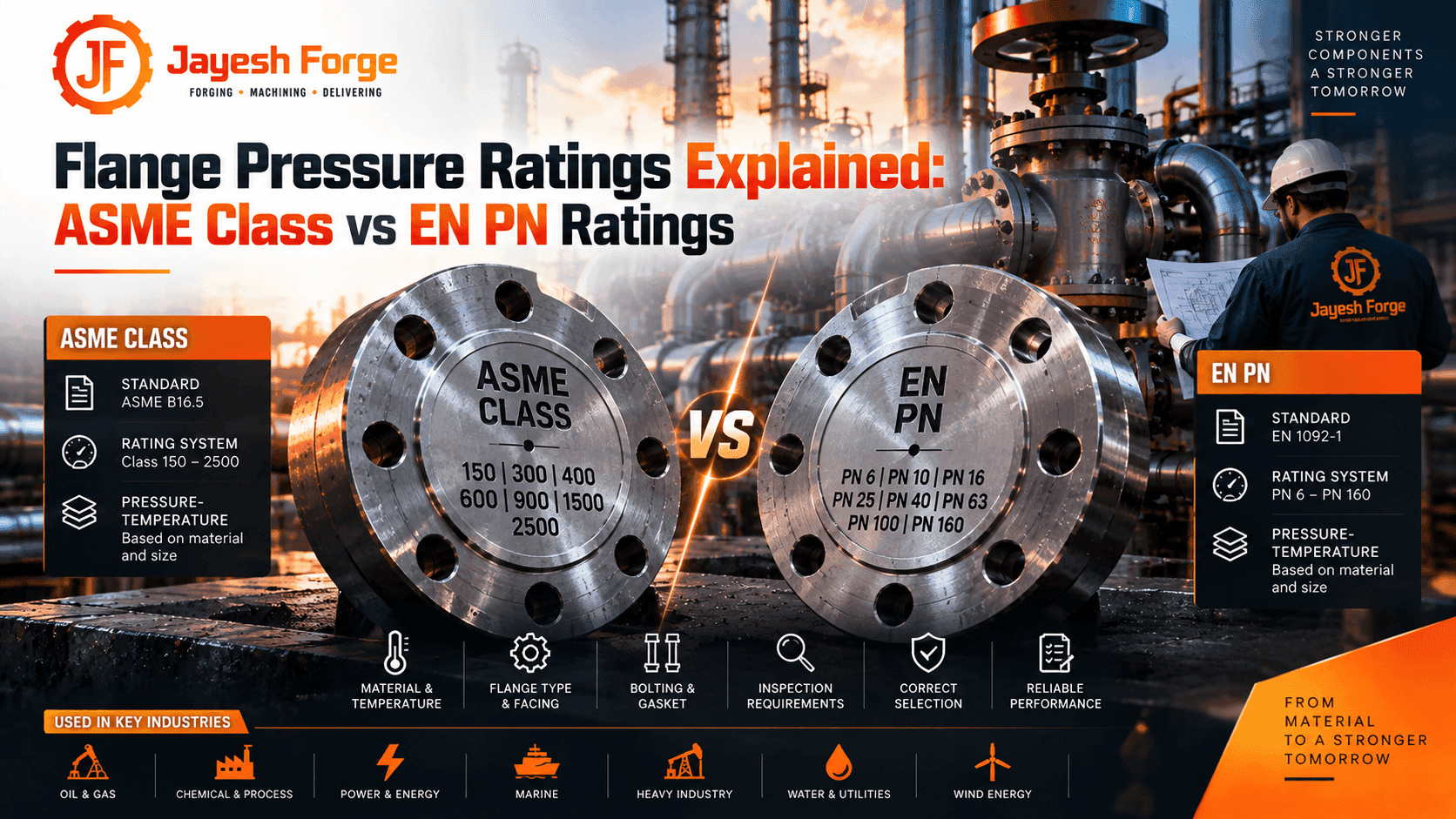
Flange Pressure Ratings Explained: ASME Class vs EN PN Ratings
Flange pressure ratings are not determined by pressure alone. Understand the difference between ASME Class and EN PN systems and the role of material, temperature, size, flange type and applicable standards when selecting forged flanges.
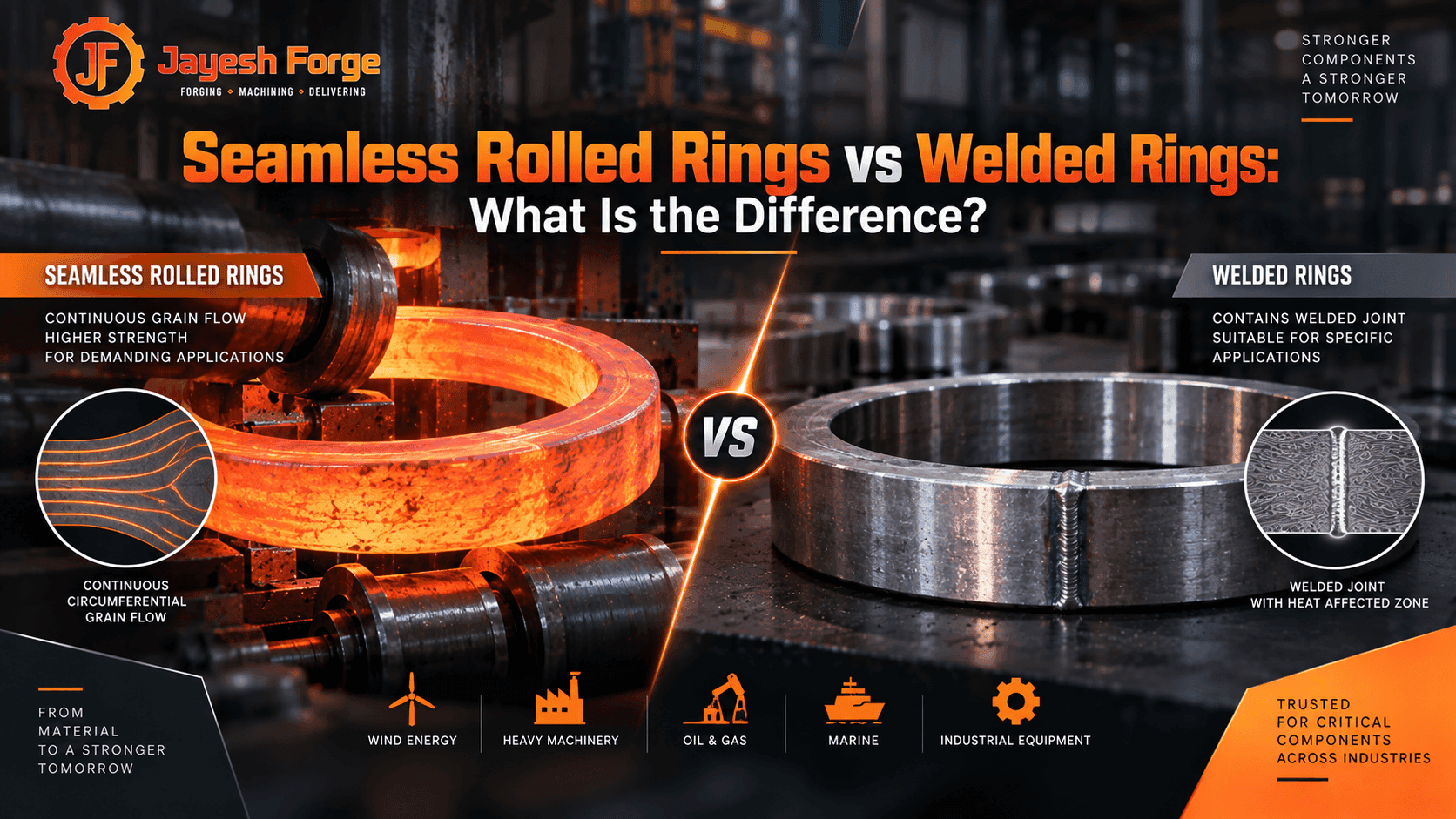
Seamless Rolled Rings vs Welded Rings: What Is the Difference?
Seamless rolled rings and welded rings can look similar after machining, but their manufacturing routes are fundamentally different. Learn how ring rolling, welding, grain flow, inspection and application requirements influence ring selection.
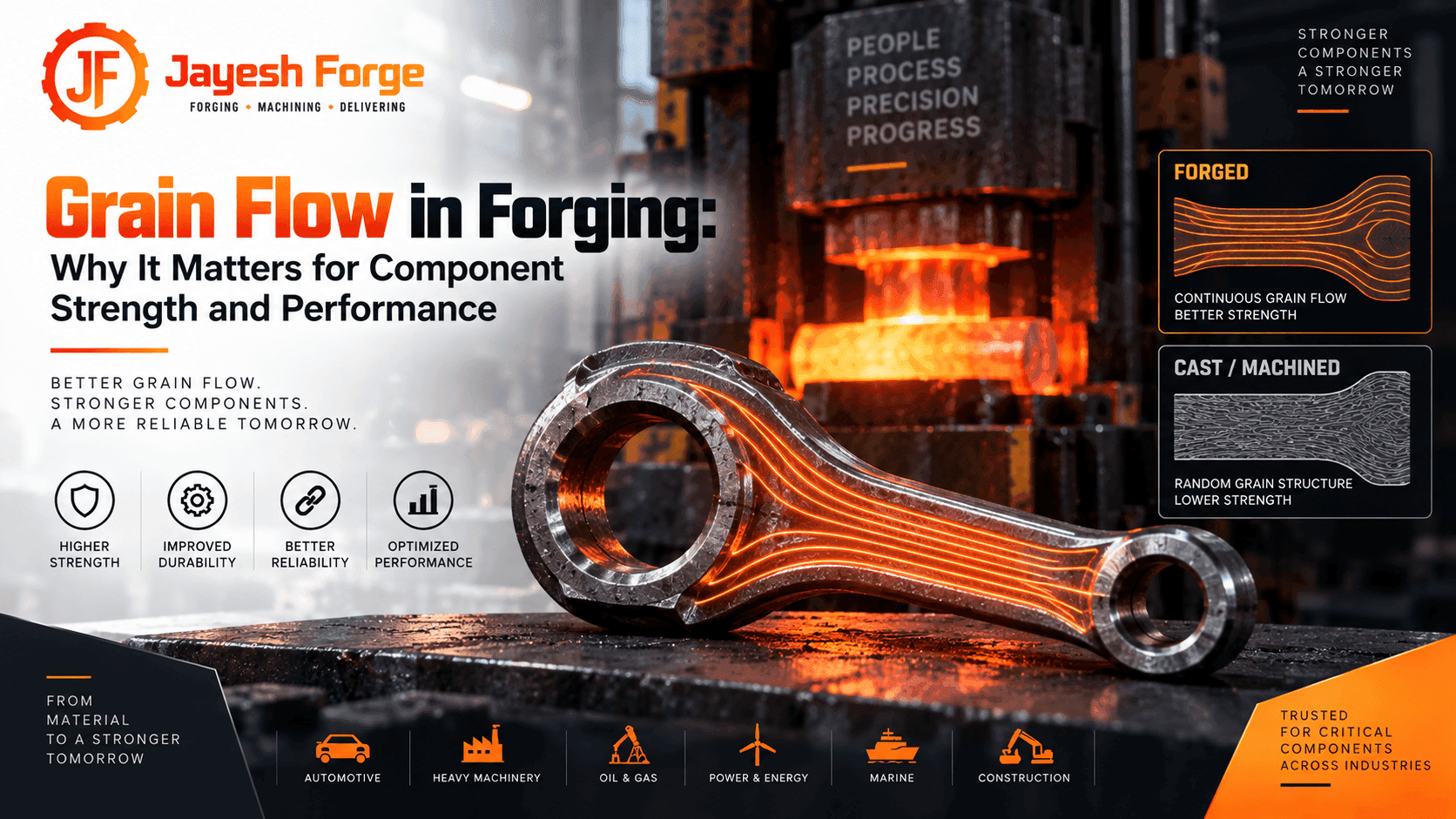
Grain Flow in Forging: Why It Matters for Component Strength and Performance
Grain flow is one of the important characteristics of forged components. Understand how metal deformation influences grain flow and why component geometry, forging direction, reduction, heat treatment and machining must be considered together.
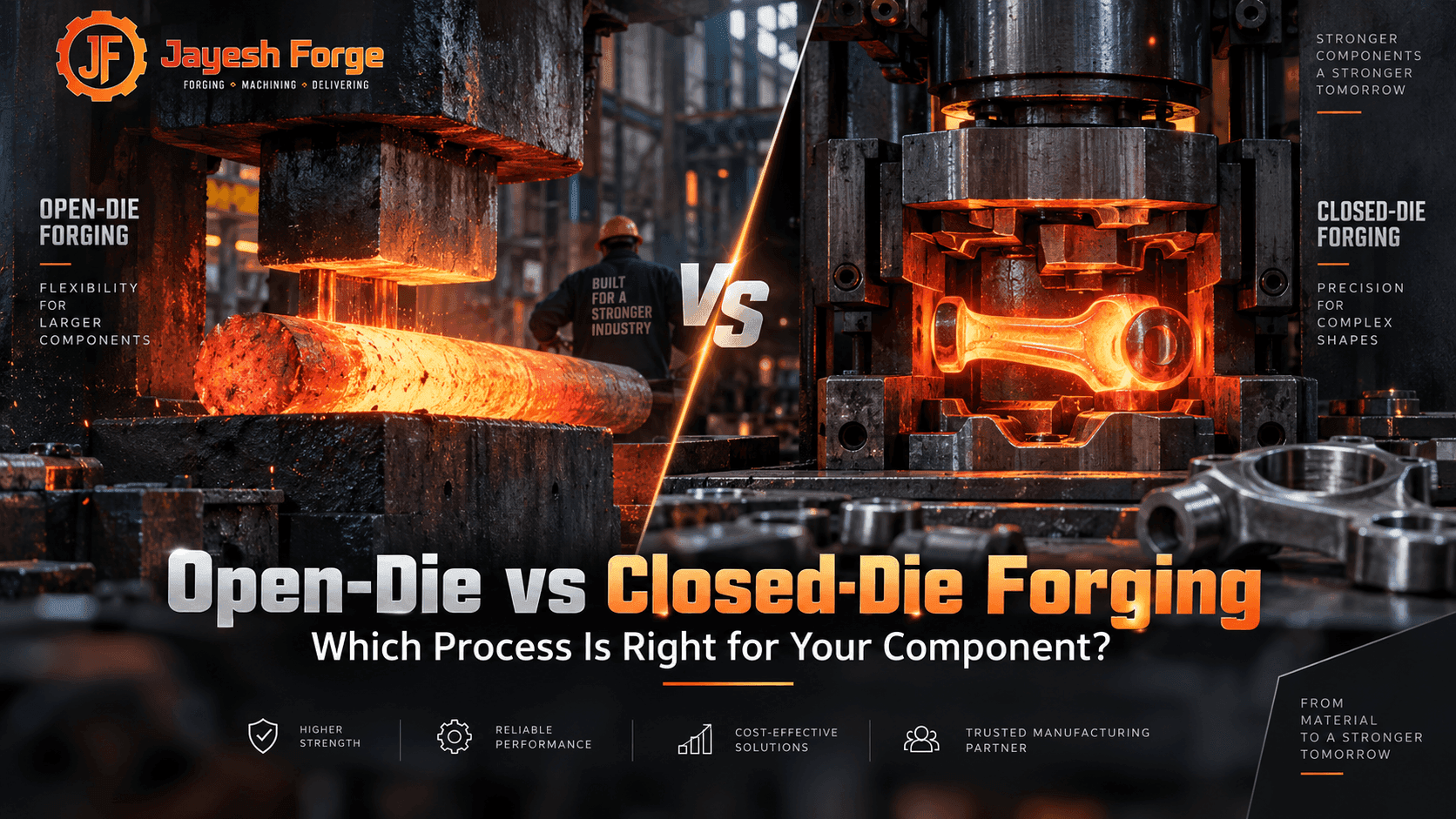
Open Die vs Closed Die Forging: Which Process Is Right for Your Component?
Choosing between open-die and closed-die forging depends on more than component shape. Size, geometry, material, production quantity, tooling, grain flow, machining requirements, tolerances, and the final application all influence the right manufacturing route.
Categories
Submit Technical RFQ
Connect with our metallurgy experts for custom die estimates, material substitution, or seamless rolled ring production.
Request a Forging Quote→Have Technical Questions for Our Plant Metallurgists?
Consult directly with our Rajkot engineering team regarding material substitution, grain refinement, or custom die estimates.